Top of book
ConnectingBest bid
—
Spread
—
Best ask
—
Waiting for the first live quote…
Yes 42.5%
Only Polymarket lists this market, so there is no second price to compare.
Fair chance strips out each venue’s built-in margin (its prices add up to more than 100%), then blends the venues by how much has traded there, so the outcomes add up to 100%. Best Yes price is the cheapest ask across venues, and the payout is what a winning $100 stake returns before fees. Open a row for each venue’s contract name, bid and ask, and how closely their rules match.
Prices come from our regular polls of each venue, the oldest 4 min ago. Ages are as of when this page was built.

The leading outcome on both venues, with the consensus between them. Hover for exact values.
Each venue’s resting orders for the Yes contract, side by side. Top of book streams live; depth refreshes every 15 seconds.
Waiting for the first live quote…
Enter a stake to see where it buys the most after fees, using each venue’s live order book.
Loading both order books…
Loading every outcome’s book…
Buys at the asks resting now (taker orders), cheapest after fees first, from order-book snapshots up to 15 seconds old. Fees: Kalshi 0.07 × price × (1 − price) per share, rounded up to the cent; Polymarket 0.04 × price × (1 − price) per share (politics rate). Fee calculator. Estimates only, not advice.
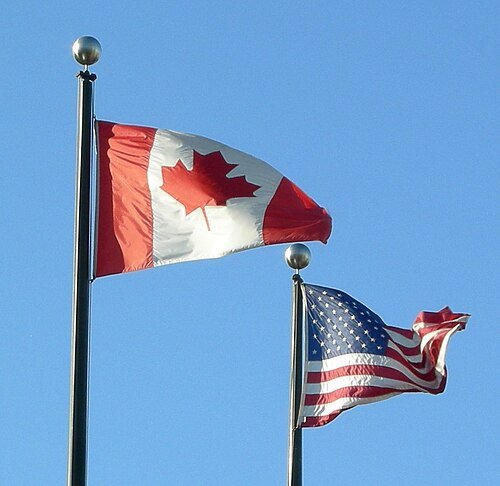
Live prediction market odds for "US-Canada deal to cut Section 338 tariffs by December 30?". Yes leads at 42.5%. $1K has traded across 1 outcome on Polymarket. The market is expected to resolve by Dec 31, 2027.
This market will resolve to “Yes” if by December 30, 2027, 11:59 PM ET, both of the following occur: i) the United States and Canada announce a qualifying diplomatic agreement to lower or remove the Section 338 tariffs on Canada; and ii) the President of the United States signs a qualifying executive action that terminates, suspends, or reduces the Section 338 tariffs on Canada, on or after the date of the first qualifying announcement. Otherwise, this market will resolve to “No”. The Section 338 Proclamations refers to the three presidential proclamations signed on July 20, 2026 under Section 338 of the Tariff Act of 1930 that impose an additional 50% duty on specified products of Canada, as amended by any later proclamation. A qualifying diplomatic agreement refers to an official agreement, treaty, deal, framework, arrangement, or substantially similar diplomatic instrument between the United States and Canada, including a multilateral agreement to which both are parties, that commits or obligates the United States to lower or remove the additional duties imposed under the Section 338 Proclamations, or includes the lowering or removal of those duties as part of its stated terms. The agreement does not need to reference Section 338 by name, provided its terms cover the additional duties imposed under the Section 338 Proclamations. An agreement that only lowers or removes other US tariffs on Canada will not qualify, including Section 232 tariffs on goods that are also covered by the Section 338 Proclamations. An agreement in principle, or a framework subject to further finalization, will qualify provided the accepted terms include the lowering or removal of the additional duties imposed under the Section 338 Proclamations. An agreement only to begin or continue negotiations, or one that sets a process or timetable for reaching a deal, will not qualify. Both countries must announce their acceptance of the same qualifying diplomatic agreement. A joint announcement will qualify, as will separate announcements from each country of its own acceptance of an agreement which, taken together, directly indicate that both countries accepted the same agreement. Qualifying announcements must come from the US government (the President, the White House, the Office of the United States Trade Representative, or the Department of Commerce) and from the Government of Canada (the Prime Minister, the Office of the Prime Minister, Global Affairs Canada, the Department of Finance Canada, or any federal minister speaking on behalf of the Government of Canada). Statements posted by the President or the Prime Minister on their official or personal social media accounts will count. Separate announcements of individual policies will not qualify if the policies are not announced as part of a diplomatic agreement. Each announcement must be a declarative statement that clearly and unambiguously communicates acceptance of an agreement. Statements that merely reference ongoing negotiations or a prospective agreement, or that allude to or express support for an agreement without confirming acceptance of a qualifying agreement, do not qualify. An announcement of the acceptance of an agreement in principle or a framework whose accepted terms include the lowering or removal of the additional duties imposed under the Section 338 Proclamations will not be treated as referencing ongoing negotiations or a prospective agreement, even if further terms, legal text, or domestic approvals remain to be finalized. A qualifying announcement need not reference the agreement by name or use specific terminology, provided it clearly communicates acceptance of an agreement. Whether announcements from the United States and Canada represent a diplomatic agreement, and whether such an agreement qualifies, will be determined through the announcements themselves, the text of the agreement, further announcements from either country, and a consensus of credible reporting, including information published after the initial announcements. If, by the deadline, both countries have made potentially qualifying announcements and a qualifying executive action has been signed, but it remains ambiguous whether the announcements represent a qualifying diplomatic agreement, this market will remain open until either i) definitive confirmation is achieved through the sources above or ii) 14 calendar days (ET) have passed after the deadline. If, at the end of the fourteenth calendar day, no definitive confirmation has been achieved, the announcements will be adjudicated based on the totality of information available from the resolution sources at that time. No single statement, denial, or presentation of evidence will govern where it is contradicted by the totality of information. A qualifying executive action refers to a presidential proclamation or executive order signed by the President of the United States and published on the White House presidential actions page or in the Federal Register that, for goods covered by the Section 338 Proclamations, either i) terminates the additional duty imposed under at least one of the Section 338 Proclamations in full, or suspends it in full with no stated end date or with a stated end date at least 90 days after the suspension begins; or ii) lowers the additional duty rate imposed under at least one of the Section 338 Proclamations below 50% for all goods covered by that proclamation. A reduced rate that applies only up to a quota volume will qualify, provided the reduced rate is available for all goods covered by that proclamation. The action must be signed on or after the date of the first qualifying announcement. The date the action is signed will be used, regardless of when the change takes effect. An action signed by the deadline but published afterward will count, provided it is published within 14 calendar days (ET) after the deadline. Other executive actions, including presidential memoranda, statements, and announcements, will not qualify. The following will not qualify as a qualifying executive action: changes to the product lists or scope of the Section 338 Proclamations; product-specific or company-specific exclusions; a suspension with a stated end date fewer than 90 days after it begins, including successive shorter suspensions that together exceed 90 days; a court ruling that invalidates, enjoins, or otherwise blocks the tariffs; changes to import bans imposed under Section 338; changes to Section 232 tariffs or any other tariff. This market will resolve to “Yes” as soon as both conditions have been met. The primary resolution sources for this market will be presidential actions published on the White House website (https://www.whitehouse.gov/presidential-actions/) and in the Federal Register, and official information from the governments of the United States and Canada; however, a consensus of credible reporting may also be used.
It is the price of a Yes contract that pays $1 if the outcome happens. A 14¢ price means traders put the chance near 14%. Where two venues list the same outcome, we blend their last prices, weighting the venue with more trading volume more heavily (neither counts for less than a quarter). When only one outcome can win, each venue’s prices add up to a little over 100% (its margin); the fair chance removes that margin so the outcomes add up to exactly 100%.
A Yes contract pays $1 if it wins, so at the best ask a $100 stake buys 100 ÷ ask contracts. At 18¢ that is about 555 contracts, paying $556 (5.56x) if Yes happens. Venue fees and price slippage on larger orders are not included.
Each venue has its own traders, fees and order book. Contracts can also settle on slightly different terms, which is why each row lists how closely the rules match.
Only when you can buy Yes on one venue below what someone pays for Yes on the other, after fees, and both contracts settle the same way. We show the executable bid and ask so you can check.
Venue prices refresh every few minutes, and the order book and live quotes stream continuously. Each venue’s card shows when we last observed it.