Top of book
ConnectingBest bid
—
Spread
—
Best ask
—
Waiting for the first live quote…
NFL / Football 50%
Next is AI / Artificial Intelligence at 49.5%. Only Polymarket lists this market, so there is no second price to compare.
Consensus blends each venue’s last price, weighted by how much has traded there. Best Yes price is the cheapest ask across venues, and the payout is what a winning $100 stake returns before fees. Open a row for each venue’s contract name, bid and ask, and how closely their rules match.
Prices come from our regular polls of each venue, the oldest 1 min ago. Ages are as of when this page was built.

The top 3 outcomes on both venues, with the consensus between them. Hover for exact values.
Each venue’s resting orders for the selected outcome’s Yes contract, side by side. Top of book streams live; depth refreshes every 15 seconds.
Waiting for the first live quote…
Enter a stake to see where it buys the most after fees, using each venue’s live order book.
Loading both order books…
Buys at the asks resting now (taker orders), cheapest after fees first, from order-book snapshots up to 15 seconds old. Fees: Kalshi 0.07 × price × (1 − price) per share, rounded up to the cent; Polymarket 0.04 × price × (1 − price) per share (politics rate). Fee calculator. Estimates only, not advice.
Live prediction market odds for "What will the NYT front-page headlines say on Sunday? (November 15)". NFL / Football leads at 50%. Next is AI / Artificial Intelligence at 49.5%. $5K has traded across 17 outcomes on Polymarket. The market is expected to resolve by Nov 16, 2026.
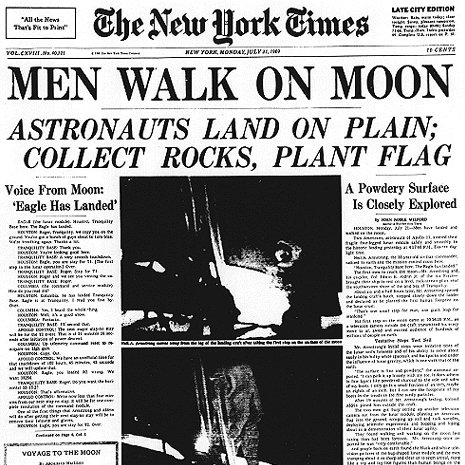
This market will resolve to “Yes” if the listed term is included in a headline on the New York Times front page on November 15, 2026. Otherwise, this market will resolve to “No”. A headline is defined as the bolded or enlarged text directly preceding each article, previewing the article’s content and typically separated from the article’s text by a black line and byline. The primary headline for each story is the headline for that story with the largest text, typically appearing in bold font and above any other headlines or text for that article. Sub-headlines, defined as additional bolded or enlarged text not separated from the primary headline by any text, will count, whether they appear before the byline or are partially surrounded by the article text but still adjacent to the primary headline. Pull quotes, however, or any bolded text not adjacent to the primary headline, will not count. Banner headlines, defined as front-page headlines bordered on the sides only by white space, will count. Image captions, article text, or any other text that does not constitute a headline, will not qualify. Any plural or possessive forms of a listed term, as well as variations in capitalization, will count toward the resolution of this market, regardless of context. Other forms of the listed term will not count. Misspellings or iterations of the listed term, including all slang forms, will not count toward a “Yes” resolution, regardless of context or intent. If the listed term appears as part of a compound word, usage of that compound word qualifies, provided the listed term remains a distinct component of the compound. This does not include suffixes, prefixes, alternative tenses, or grammatical variations that alter the root word. (E.g. if the listed term is joy, killjoy qualifies but joyful does not. E.g. if the listed term is sun, sunflower qualifies but sunny does not.) If the listed term is part of a hyphenated compound, use of that hyphenated compound will qualify. For example, if the listed term is “NATO,” “pro-NATO” and “anti-NATO” qualify. If the listed term has non-standard transliterations into English, such transliterations will qualify if they are phonetically equivalent. For example, if the listed term is “Erdogan,” “Erdoğan” qualifies. If the listed term is “Zelensky,” “Zelenskiy” qualifies. If the listed term is an abbreviation, periodized forms of that abbreviation will qualify. For example, if the listed term is “AI,” “A.I.” qualifies. However, extraneous symbols inserted into a word (e.g. r@d1cal for “radical”) will disqualify it from counting toward a “Yes” resolution. This market only pertains to the daily New York edition prints of the New York Times, also available at https://nytimes.pressreader.com/the-new-york-times/. Only the first official release of a qualifying front page will be counted. Any subsequent releases that differ from the initial release will not be considered. Other editions will not be considered. You can find an example of what counts here: https://polymarket-upload.s3.us-east-2.amazonaws.com/nyt-headlines.jpeg.
It is the price of a Yes contract that pays $1 if the outcome happens. A 14¢ price means traders put the chance near 14%. Where two venues list the same outcome, we blend their last prices, weighting the venue with more trading volume more heavily (neither counts for less than a quarter). When only one outcome can win, each venue’s prices add up to a little over 100% (its margin); the fair chance removes that margin so the outcomes add up to exactly 100%.
A Yes contract pays $1 if it wins, so at the best ask a $100 stake buys 100 ÷ ask contracts. At 18¢ that is about 555 contracts, paying $556 (5.56x) if Yes happens. Venue fees and price slippage on larger orders are not included.
Each venue has its own traders, fees and order book. Contracts can also settle on slightly different terms, which is why each row lists how closely the rules match.
Only when you can buy Yes on one venue below what someone pays for Yes on the other, after fees, and both contracts settle the same way. We show the executable bid and ask so you can check.
Venue prices refresh every few minutes, and the order book and live quotes stream continuously. Each venue’s card shows when we last observed it.