
Top of book
ConnectingBest bid
—
Spread
—
Best ask
—
Waiting for the first live quote…
Autism 99%
Next is Predict / Prediction at 99%. The venues list this event, but none of their outcomes are matched yet, so prices are shown separately.
Consensus blends each venue’s last price, weighted by how much has traded there. Best Yes price is the cheapest ask across venues, and the payout is what a winning $100 stake returns before fees. Open a row for each venue’s contract name, bid and ask, and how closely their rules match.
Prices come from our regular polls of each venue. Ages are as of when this page was built.



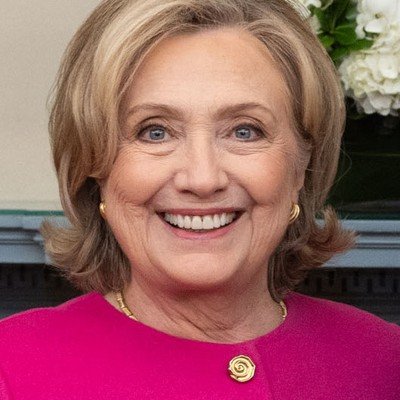


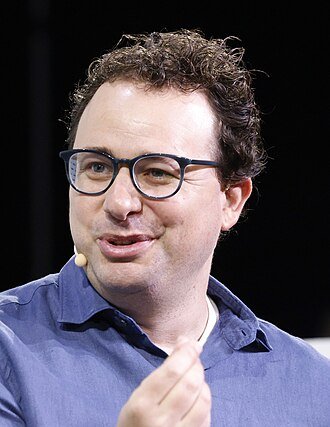


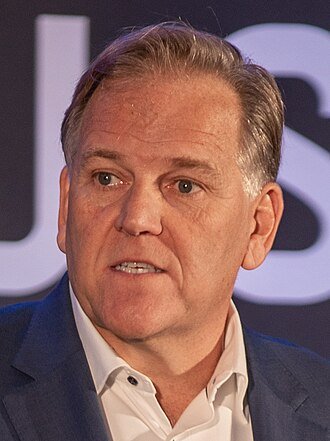

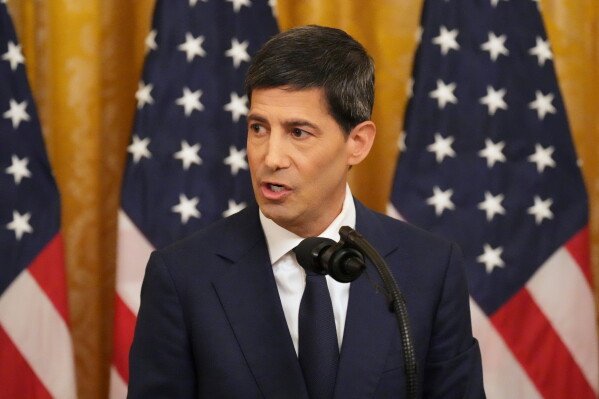


Summarized from each venue’s published rules; the venue’s own rules page is the final word.
The top 3 outcomes on both venues, with the consensus between them. Hover for exact values.
Each venue’s resting orders for the selected outcome’s Yes contract, side by side. Top of book streams live; depth refreshes every 15 seconds.
Polymarket doesn’t list Autism for this event.
Waiting for the first live quote…
Enter a stake to see where it buys the most after fees, using each venue’s live order book.
Loading both order books…
Buys at the asks resting now (taker orders), cheapest after fees first, from order-book snapshots up to 15 seconds old. Fees: Kalshi 0.07 × price × (1 − price) per share, rounded up to the cent; Polymarket 0.04 × price × (1 − price) per share (politics rate). Fee calculator. Estimates only, not advice.
Live prediction market odds for "Who will Trump publicly insult by October 31?". Autism leads at 99%. Next is Predict / Prediction at 99%. $247K has traded across 32 outcomes on Polymarket and Kalshi. The market is expected to resolve by Oct 31, 2026.
This market will resolve to "Yes" if Donald Trump makes any public statement in which he insults the listed individual between market creation and the specified date (ET). Otherwise, this market will resolve to "No". A public statement is any written, verbal, or recorded statement which is either made in a public setting, published by the speaker, or on the record to media, and the direct language of which is made publicly available within the specified timeframe. Pre-recorded public statements will count for the date (ET) that they are made publicly available. Statements made in private that are subsequently leaked will not qualify, even if credibly reported. Narrations and paraphrasings do not qualify. Images and videos posted on verified social media accounts will only qualify if they contain insulting language clearly directed at the individual, whether within the content itself or in an accompanying caption. Language within the content of a video will only qualify if Donald Trump is clearly portrayed as saying it. Insulting language within the content of a video said by anyone other than Donald Trump or a portrayal thereof will not qualify. A quote post will qualify if added language independently qualifies as an insult, or endorses insulting language directed at the individual within the quoted post; a repost of another account's post will not qualify. A public statement qualifies as an insult if it mocks, degrades, or disparages the individual either personally or professionally. This includes calling the individual a clearly insulting trait (e.g., weak, stupid, disloyal, a failure), using an insulting nickname (e.g., Crooked Hillary), using other clearly derogatory language, or using the negative form of a positive trait in a clearly derogatory manner (e.g., “He isn’t smart”, “He has no judgment”). Disparaging the individual in their professional capacity will qualify (e.g., "He is a disaster candidate," "He is terrible at his job"); however, negative comments directed at the individual's specific actions, policies, or decisions will not qualify (e.g., "He has bad policies," "He is wrong about healthcare"). A statement made in direct reference to the individual will qualify even if they are not named, so long as it is reasonably clear from context that they are the subject. The resolution sources will be public statements made by Donald Trump and a consensus of credible reporting.
It is the price of a Yes contract that pays $1 if the outcome happens. A 14¢ price means traders put the chance near 14%. Where two venues list the same outcome, we blend their last prices, weighting the venue with more trading volume more heavily (neither counts for less than a quarter). When only one outcome can win, each venue’s prices add up to a little over 100% (its margin); the fair chance removes that margin so the outcomes add up to exactly 100%.
A Yes contract pays $1 if it wins, so at the best ask a $100 stake buys 100 ÷ ask contracts. At 18¢ that is about 555 contracts, paying $556 (5.56x) if Yes happens. Venue fees and price slippage on larger orders are not included.
Each venue has its own traders, fees and order book. Contracts can also settle on slightly different terms, which is why each row lists how closely the rules match.
Only when you can buy Yes on one venue below what someone pays for Yes on the other, after fees, and both contracts settle the same way. We show the executable bid and ask so you can check.
Venue prices refresh every few minutes, and the order book and live quotes stream continuously. Each venue’s card shows when we last observed it.