This market has closed
Trading ended on Dec 31, 2026. The prices below are the last ones before it closed and no longer update. Browse open markets
Odds by venue
Consensus blends each venue’s last price, weighted by how much has traded there. Best Yes price is the cheapest ask across venues, and the payout is what a winning $100 stake returns before fees. Open a row for each venue’s contract name, bid and ask, and how closely their rules match.
- Polymarket
No outcome is trading right now. Check back when the venues reopen this market.
Who resolves this market
- Polymarket resolves via:

- UMA optimistic oracle
About this market
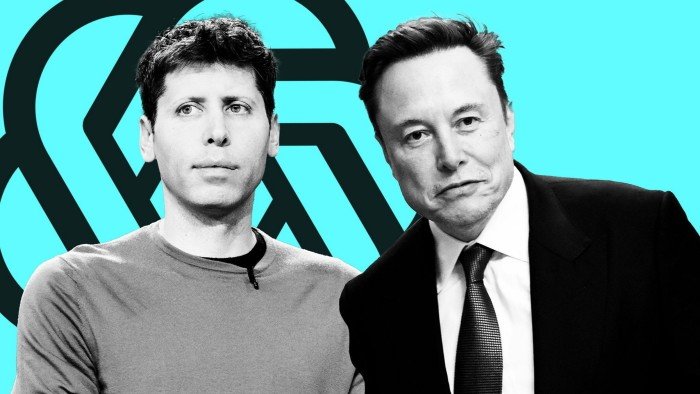
Final prediction market prices for "Will Elon Musk win his case against Sam Altman?". $422K has traded across 0 outcomes on Polymarket. The market closed on Dec 31, 2026.
This market will resolve to “Yes” if the U.S. District Court in the Northern District of California sides with Elon Musk in Elon Musk v. Sam Altman et al by December 31, 2026, 11:59 PM ET. Otherwise, this market will resolve to “No”. If the case reaches a determination without settlement, the court will be considered to side with Musk based on the following criteria (in order of priority): 1. If Elon Musk receives a larger net monetary award than Altman et al (after offsetting any awards against the parties), the court will have sided with Musk. Compensatory damages, punitive damages, restitution, and statutory damages are included in monetary awards. Monetary awards do not include Attorney’s fees or other costs which are excluded from the monetary recovery calculation. 2. If there is no net monetary advantage for either party, the court will have sided with Musk if Musk prevails on claims seeking the largest amount of relief, in dollars, in the original pleadings of the case, as compared to Altman et al. If the relevant relief amounts are equivalent or can’t be determined, the court will have sided with Musk if Musk prevails on a greater number of primary causes of action than Altman et al. Procedural claims, discovery sanctions, and attorney's fee requests will not be considered primary causes of action. 3. If the case terminates without substantive judgment, the court will have sided with Musk if Altman et al voluntarily dismiss all claims against Elon Musk with prejudice. All other scenarios of termination without substantive judgment, including if there are no claims against Musk, will result in the court not siding with either party and will resolve this market to “No”. If Elon Musk and Altman et al settle this case with a disclosed net payment to Elon Musk, the court will have sided with Musk. If Elon Musk and Altman et al settle this case with a disclosed net payment to Altman et al, this market will resolve to “No”. If Elon Musk and Altman et al settle this case with mutual releases and no disclosed payment direction, or if settlement terms are sealed and a consensus of credible reporting does not indicate payment direction within 7 days of the settlement announcement, the court will not have sided with either party and this market will resolve to “No”. Additional notes: If the court issues a default judgment in favor of Elon Musk, this market will use the listed criteria above for resolution. If the court issues a default judgment against Elon Musk, this market will resolve to “No”. If the court issues a full summary judgment in favor of Elon Musk, the court will have sided with Musk. A partial summary judgment will apply to resolved claims only, and remaining claims will proceed under the above listed resolution criteria. A summary judgment on liability only will not constitute a court siding with either party until the damages are determined. Mistrials with prejudice will be considered to be case termination and will be evaluated according to criteria 3 above. Mistrials without prejudice, hung juries, or mistrials due to procedural errors will not constitute the court siding with either party. If retrial is ordered and occurs before December 31, 2026, 11:59 PM ET, resolution of this market will be based on the result of that retrial. Any sua sponte judicial dismissal will be treated according to whether the dismissal is with or without prejudice. If unspecified, it will be treated as without prejudice. This market applies only to trial-level case resolutions and does not include any appeals. Only claims directly involving Elon Musk will be considered; third-party claims, interpleader actions, and claims between other parties will not be considered. Procedural victories will not be considered as part of the court’s decision unless accompanied by substantive relief on the merits of the case. Injunctive relief will only count as the court’s decision if it provides the primary relief sought in the original pleadings. Case consolidation with other proceedings will not affect this market’s outcome unless the consolidated outcome directly resolves the dispute between Elon Musk and Altman et al. If there are multiple defendants, the court must side with Elon Musk relative to the combination of all opposing parties. Joint and several liability awards will be attributed to Elon Musk based on Musk’s individual liability percentage. Cross-claims between co-defendants will not affect the court’s decision relative to Elon Musk. The primary resolution source for this market will be official information from the relevant court; however, a consensus of credible reporting will also be used.
Questions
What does the consensus price mean?
It is the price of a Yes contract that pays $1 if the outcome happens. A 14¢ price means traders put the chance near 14%. Where two venues list the same outcome, we blend their last prices, weighting the venue with more trading volume more heavily (neither counts for less than a quarter). When only one outcome can win, each venue’s prices add up to a little over 100% (its margin); the fair chance removes that margin so the outcomes add up to exactly 100%.
How is the payout worked out?
A Yes contract pays $1 if it wins, so at the best ask a $100 stake buys 100 ÷ ask contracts. At 18¢ that is about 555 contracts, paying $556 (5.56x) if Yes happens. Venue fees and price slippage on larger orders are not included.
Why do the venues show different prices?
Each venue has its own traders, fees and order book. Contracts can also settle on slightly different terms, which is why each row lists how closely the rules match.
Is a price gap an arbitrage?
Only when you can buy Yes on one venue below what someone pays for Yes on the other, after fees, and both contracts settle the same way. We show the executable bid and ask so you can check.
How fresh are these prices?
Venue prices refresh every few minutes, and the order book and live quotes stream continuously. Each venue’s card shows when we last observed it.
More ai_tech markets
See all ai_tech markets- Best AI at the end of 2026?Claude48.3%$15.2M traded
- When will Anthropic officially announce an IPO?Before Apr 1, 202793%$3.4M traded
- Which company has the best AI model end of October?Google89.1%$3.2M traded
- AI bubble burst by...?June 30, 202720.5%$3.1M traded
- OpenAI IPO by...?June 30, 202733.5%$3.1M traded
- Which company has best AI model end of 2026?Anthropic46.5%$2.9M traded